
Two of the world’s biggest art galleries have announced the closure of their respective Hong Kong outposts as major players reassess their global footprint amid a multi-year slump in the market. Pace Gallery, which represents artists such as Yoshitomo Nara, David Hockney and the estates of Agnes Martin and Mark Rothko, will close its space in H Queen’s, in Central, after seven years, following the end of its final exhibition by Cuban artist Alejandro Piñeiro Bello on October 18. On the other...
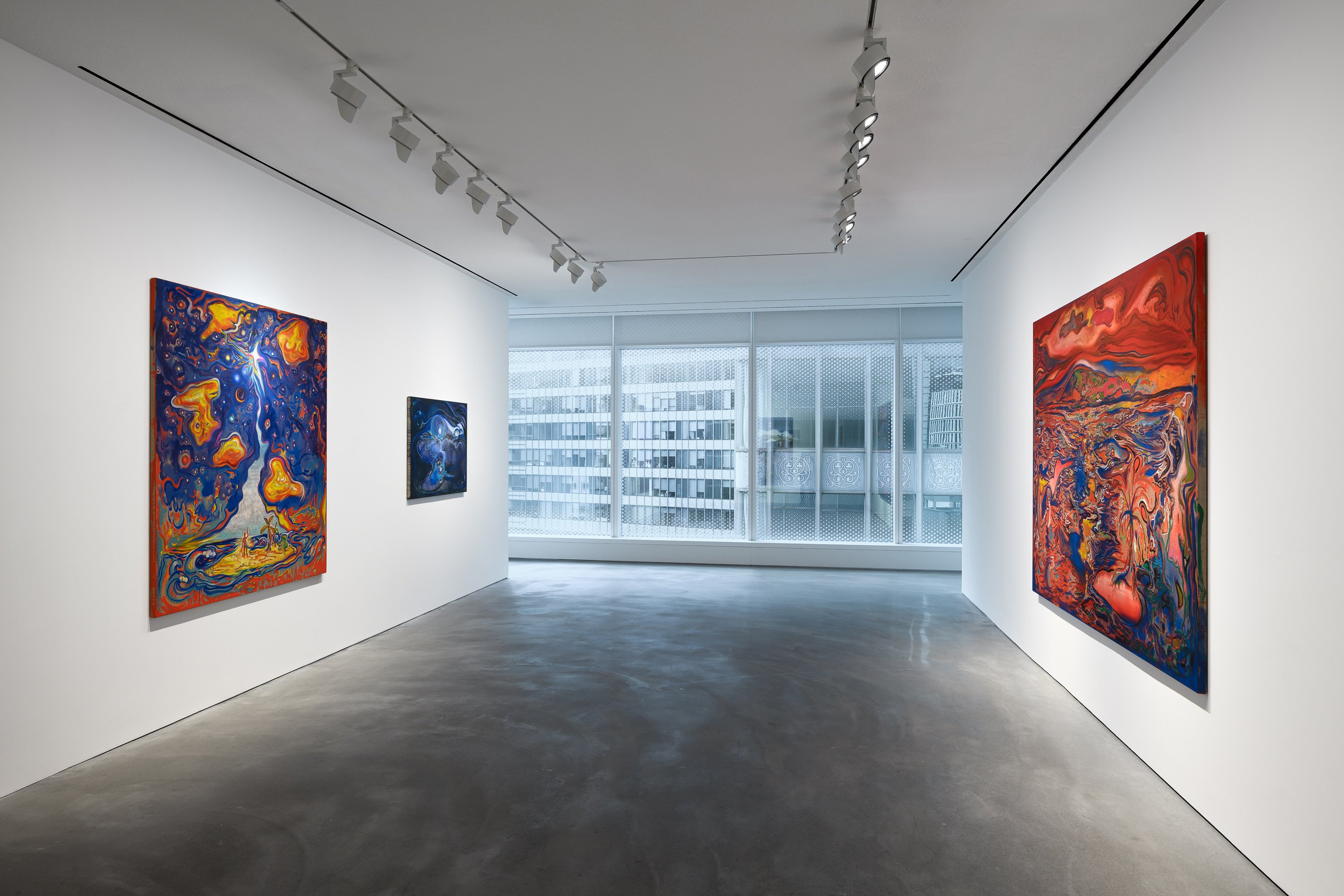
Two of the world’s biggest art galleries have announced the closure of their respective Hong Kong outposts as major players reassess their global footprint amid a multi-year slump in the market. Pace Gallery, which represents artists such as Yoshitomo Nara, David Hockney and the estates of Agnes Martin and Mark Rothko, will close its space in H Queen’s, in Central, after seven years, following the end of its final exhibition by Cuban artist Alejandro Piñeiro Bello on October 18. On the other side of the harbour, Perrotin moved out of its gallery at K11 Atelier Victoria Dockside on October 1 after six years in the space. Both companies say they will maintain an office in Hong Kong and relaunch a gallery in the city in the future, but have left the timing open-ended. The global art market has suffered a multi-year slowdown that began in 2022. In 2024, it experienced a 12 per cent fall, according to the most recent Art Basel and UBS Art Market Report.
In Hong Kong, the impact is most obvious in the auction market, where transactions hit an eight-year low this autumn. So far, the city seems to have been spared the wave of closures that have hit the US and the UK, during which long-established names such as Blum & Poe and its brief successor Blum Gallery, Venus Over Manhattan and Marlborough Gallery have closed in the past two years. According to the FindArt HK app, which tracks exhibitions across Hong Kong, the total number of commercial galleries has remained at around 125 since the app was launched a year ago. The reality is that Hong Kong has lost market share to other regions while also suffering the fallout from the worst corrections in the contemporary art market since the 1990s. Marc Glimcher, chief executive of Pace Gallery and son of its still-active founder Arne, told the Post that the city’s importance as a market has declined following the Covid-19 pandemic, especially as many wealthy Chinese collectors now have homes in Japan. “The art market is very fluid. We made our bet in Japan when we opened a gallery at Azabudai Hills [in Tokyo] in 2024. It paid off very well. We have seen an almost equal number of Chinese and Japanese collectors there. The past year has been very tough globally for the art market, but Japan is extremely successful right now,” he said.
In addition, the American dealer said the political situation in Hong Kong has not provided “an inviting environment” for artists. Some Chinese artists represented by Pace had previously considered moving to Hong Kong but changed their minds after the “political instability” of the 2019 protests and new limits on artistic expression introduced by the National Security Law, Glimcher said. He further explained that the closure was prompted by the expiration of the lease at H Queen’s and the departure of its Hong Kong-based president of Greater China, Evelyn Lin, after just a year at the gallery. Lin said her departure was amicable and that she will be returning to Sotheby’s – where she worked from 1998 to 2018 – as the Asia chairman of the modern and contemporary art department, replacing Elaine Holt, who also stayed in her role for only a year.
Speaking to this writer a year ago for the book Art in Hong Kong: Portrait of a City in Flux, Glimcher said that it would be “insane” to say that Hong Kong was done as an art market and that it remained unbeatable as a “pan-Asian meeting spot”. Pace remains committed to the Hong Kong and Greater China market, he stressed. “Let me be extremely clear. We have every intention to stay in Hong Kong. We are just in the process of finding a great space that is more than just at the top of an office building. “We want our new gallery to be an experience that can compare with our other spaces, and there are some interesting property projects coming up in Hong Kong.” He added that the market slowdown “makes it easier” to pause exhibitions in the city. Perrotin, founded by Frenchman Emmanuel Perrotin and majority-owned by a real estate investment firm, replied to the Post’s queries about its plans through an emailed statement. “Perrotin Hong Kong has recently moved out of its current location at K11 Atelier Victoria Dockside at the end of the five-year contract. We see it as the optimal timing to move back to Central, where we started our first Asian outpost in 2012. We believe this new location will better serve our community, enhance accessibility, and reduce our operational costs. “While the exact reopening date is still to be confirmed, we are diligently working to finalise the details and relaunch the gallery as quickly as possible.” Pace’s official statement about the closure of its Central gallery also highlights the fact that H Queen’s is not quite the “art hub” that it started as seven years ago. “Our gallery space at H Queen’s is no longer serving us, and since our lease is expiring, like many other galleries, we are taking the opportunity to exit,” the gallery said.
Today, only two galleries remain there: David Zwirner and Tang Contemporary Art. David Zwirner said in a statement: “We were concerned when Hauser & Wirth left H Queen’s, and with Pace’s recent departure, the viability of the building to fulfil its promise as a premier arts gallery building in Hong Kong is certainly in question. “As our lease approaches its end, we will be weighing our options. However, please hear me loud and clear: we are deeply committed to Hong Kong. It is a major city for the arts and a vital cultural hub for the region.” H Queen’s has no comment. White Cube, one of the first “mega galleries” to arrive in Hong Kong, says it remains committed to Hong Kong as its regional headquarters. “The art market has shifted significantly since the pandemic, and we are seeing a younger generation of collectors emerging across Asia,” said Wendy Xu, the gallery’s Asia managing director. “White Cube has always had a very international client base, and that continues to be the case. “Within Asia, our strongest markets remain Hong Kong and mainland China. Over the past 15 years, we’ve seen an extraordinary rise in collecting from mainland China, though in recent years that growth has naturally plateaued and the pace has slowed somewhat. That said, engagement remains high – we continue to see strong visitor numbers from mainland China, with many collectors travelling regularly to Hong Kong. “The city remains a key hub for the region, offering access to some of the most important, high-quality and international exhibitions across galleries, museums and the auction houses,” she added.