
“Buti naman naisip nyong bumisita dito (It’s good that you thought of visiting here).” Our guide uttered that remark in the middle of a tour of Culion Island’s main tourism area, lamenting that the sleepy island still rarely sees outsiders. The site of the world’s biggest leper colony in the 20th century where research yielded […]
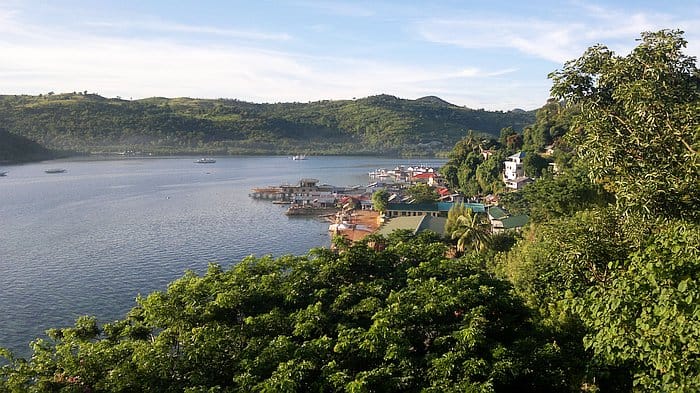
“Buti naman naisip nyong bumisita dito (It’s good that you thought of visiting here).” Our guide uttered that remark in the middle of a tour of Culion Island’s main tourism area, lamenting that the sleepy island still rarely sees outsiders.
The site of the world’s biggest leper colony in the 20th century where research yielded a cure for this disease — which had been misunderstood and feared for at least 4,000 years1 — Culion’s uniqueness centers on its archives which were included in the UNESCO (United Nations Educational, Scientific and Cultural Organization) Memory of the World Register for Asia and the Pacific in 2018 “as one of Asia-Pacific’s most important documentary collections.”2 As such, it may eventually be counted in the global list (which now contains only four Philippine treasures, namely: the Philippine Paleographs of Hanunoo, Buid, Tagbanua, and Palawan; the radio broadcast of the Philippine People Power Revolution; the Jose Maceda Collection of Philippine traditional music; and the Presidential Papers of Manuel L. Quezon).3
Even from afar, Culion’s unique history is evident from the huge Commonwealth seal (bearing the monogram PHS, for Philippine Health Service — the predecessor of today’s Department of Health) that adorns Bundok Aguila which towers over the seaport.
But, for some reason, such a distinction is lost on prospective tourists to the island.
Despite sharing the same pristine waters and marine environment as Palawan’s more developed, world-renowned beaches, Culion’s uniqueness has been eclipsed by its better-known neighbors like Coron and El Nido.
Palawan, the province to which Culion belongs, recorded 2.126 million domestic and foreign visitors last year (and 1.085 million last semester alone). While Culion’s latest tally was not immediately available, a 2022 list showed it placing eighth among 10 areas whose tourist data are tracked by Palawan’s Provincial Tourism Office. Puerto Princesa City, El Nido, Coron, and San Vicente, in descending order, regularly dominate that list. The top destinations show tourists’ preference for the province’s beaches, diving sites, and other nature attractions.4
The Culion locals whom we talked to blamed a persistent social stigma for its weak tourism numbers. “Buti hindi kayo natakot pumunta dito (It’s good that you were not afraid to come here),” said a former patient who greeted us in a rundown healthcare building that was built under US rule. This despite the fact that the government declassified leprosy as a public health problem — though rather belatedly — in 1998.5 Culion itself was deemed as having met clinical criteria for leprosy elimination under the government’s National Leprosy Control Program in 2006, marking the centenary of the island’s start as a leprosarium in 1906.
In a bid to address this perceived negative image, Culion’s local government passed Municipal Resolution 2025-2361 in September 2025. That local legislation sought to rebrand the island by banning the use of historical labels like “The island of the living dead” and the “Land of no return” in promotion materials and public documents, replacing them with the tagline, “Paradise regained” (except in historical and academic contexts like museum displays, documentaries, research, and educational materials).6
I don’t know if that fairly recent rebranding did the trick and has begun luring more visitors to Culion since then. Neither am I aware of any study proving that folks outside Palawan stigmatize leprosy. I also doubt if many of our youth — who have proven quite adventurous in their travels — are aware of Culion’s unique history.
While such rebranding to show the island in a more positive light may have its merits, I believe that localities need to maximize any unique features as an edge over common lures they may share with neighbors, e.g., beaches and World War II shipwreck dive sites.
Culion, whose economy consists mainly of fishery and agriculture-related and handicraft activities like dried fish and bottled seafood production as well as sawali (woven bamboo mats for walls) and basket-weaving (oh, and the island also has two pearl farms)7, stands to gain from a revved-up tourism drive, what with the island suffering a 24.8% poverty incidence in 2023 — compared to a 15.5% national incidence, though it is more than a third less than the 40.2% which Culion posted in 2021.8 In a December 2024 piece, I cited tourism’s multiplier effect as it diversifies local economies, sparking small businesses and enabling them to expand, generating new jobs, infusing new money into the economy from visitors, as well as boosting business and tax revenues, etc.9
MAXIMIZING HERITAGE TOURISM So, how can Culion leverage the potential of its unique history to augment its more conventional lures like dive sites?
The island had already taken a significant step in putting up its museum and archives, established in May 2006 with help from the Sasakawa Health Foundation, which was founded in Japan in 1974 with the principal objective of eliminating leprosy.10 That establishment, located within the complex of the Culion Sanitarium and General Hospital, features a visual history of the leprosarium and daily life on the island under the shadow of the disease, complete with samples of medical implements (man, those syringes looked Gothic with their very long, thick needles) and other equipment, as well as samples of the medicines developed. A rather humid room reserved for researchers is stacked nearly to the ceiling with boxes containing original records of the island.
The museum is fairly clean with a functional public washroom (it can be improved though). But perhaps symptomatic of subsequent lack of funding is the fact that the air conditioners failed to do their job when my family and I visited the museum — perhaps it was just a matter of cleaning filters regularly, but even that task takes manpower.
Now, I am not an archivist, but I do know that humidity damages historical records, which are the subject of the UNESCO registry. An item or collection may be removed from this registry if, among others, documents or other records concerned deteriorate to the point that they no longer meet criteria. So, careful, because we may lose this distinction even before Culion’s archives are considered for inclusion in the international registry.
Take care of that core heritage treasure first.
Second, increase the island’s social media footprint.
Culion’s Office of Municipal Tourism does maintain an official Facebook page11, with 11,000 followers. While that is a worthwhile — and necessary — operation, it still lacks some basic information, which can be presented in a more attractive fashion that is friendly to viewers of all ages. For starters, why not upload the rather comprehensive information contained in the printed brochure which one gets from the tourism office as soon as one disembarks at the pier? (And “pin” the posted brochure or its contents so they are not buried by subsequent posts.)
It needs to go beyond occasional announcements and short features of some of the island’s establishments by engaging its followers, i.e., encouraging them to post their experiences there. Promoting (at least three months in advance) “fun” on-site public events scheduled during peak seasons will also go a long way to foster such engagement.
Hotels, inns, and other accommodations, as well as other commercial establishments on the island, should also have their own social media pages, or at least websites, where interested parties may inquire for their visits and book room reservations. (By the way, contact details of establishments on the municipal tourism office’s official printed brochure can hardly be read).
One does find a smattering of vlogs here and there. Culion’s tourism planners will do well to scour these pages for tips on how to improve visitor experience — many times by addressing the most basic concerns, e.g., not much information online on the island’s ferry system, and the ferry ticket office lies some distance from the pier itself, etc.12 Treat even complaints as a blessing, for there can never be enough improvement for anyone engaged in stiff competition with neighbors.
Better yet, find ways to engage travel bloggers and vloggers regularly in order to boost the island’s visibility in their accounts.
Third, while Culion itself may not be compelling enough to draw enough visitors for now, it may boost tourist arrivals by forming part of regional tour packages (in much the same way, for example, that the 17th Century Twin Forts of Romblon are included in an international luxury cruise itinerary that links Manila, Romblon, Coron, and Vigan with Osaka and Tokyo). Hence, the need to work more closely with tour operators. I suspect that Corregidor and Fort Drum can benefit from this packaged framework to draw more visitors as well.
Other approaches here include encouraging and accommodating student tours, arranging for neighboring resorts and domestic airports to display well-designed posters, as well as help from the National Government itself in the form of rotating all-out monthly promotion of specific regions by the Tourism department.
Finally, in this age of all things “Instagrammable,” there is a need to spruce up the scenic spots on the island itself — starting with a garbage-free port (not just the main port) which is the first thing that visitors see… and smell.
Start with general cleanliness, for I suspect that the flies that frequently ruin travelers’ otherwise succulent, affordable seafood meals there and in neighboring resorts can be traced to insufficient waste management (especially as flies may abound in coastal environments).
Next, select spots to spruce up for social media shots, i.e., along the heritage walk path. Besides constantly maintaining cleanliness, these choice spots may sport well-designed, eye-catching markers (perhaps designed by local artists), even complete with QR codes that point to a brief explanation of the history and significance of a particular spot.
Just my two centavos worth of suggestions there. But how’s that for a start for drawing more outsiders to this off-the-beaten path heritage-ecotourism destination?
Should this tack succeed, Culion could provide a test case of how localities can use their unique histories to help make themselves compelling to prospective visitors.
1 https://tinyurl.com/29r7lpqo
2 https://tinyurl.com/2dkzt92g
3 https://tinyurl.com/2xl2vuqt
4 https://tinyurl.com/27mwak79
https://tinyurl.com/27oa2up9
https://tinyurl.com/2xhu6azq
https://tinyurl.com/24x5cylx
5https://law.upd.edu.ph/wp-content/uploads/2021/05/DOH-Administrative-Order-No-2021-0004.pdf
6 https://tinyurl.com/2cw434so
7 https://tinyurl.com/259xfbob
8https://psa.gov.ph/sites/default/files/phdsd/2_2023%20SAE_with%20PSGC_noHUC_06Feb2026.xlsx
9 https://tinyurl.com/27cshs4b
10 https://tinyurl.com/2bdw6xgt
11 https://tinyurl.com/26xj8oe4
12 https://tinyurl.com/2y3p3h2o
Wilfredo G. Reyes was editor-in-chief of BusinessWorld from 2020 through 2023.